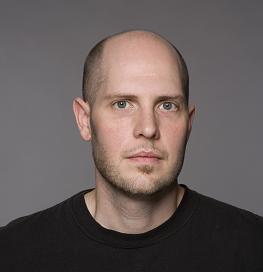
“If we do not reach Mars in my lifetime I will be very disappointed.”
That bold statement from Elon Musk, founder of Tesla Motors, SpaceX, and Solar City, encapsulates his passionate pursuit to put Earthlings on the Mars. Thus is the focus of his SpaceX startup.
Speaking to a jam-packed exhibition hall at South by Southwest Interactive, Musk appeared in a Q&A keynote led by former Wired editor-in-chief and current CEO of 3D Robotics Chris Anderson. During the interview, Musk was relaxed, affable, thoughtful, and clad in his prototypical black polo shirt. He spoke about all three of his ventures, but spent the most time on his quest for Mars.
A White-Knuckle Flight
Straight away Anderson asked Musk about the highly publicized glitch in the recent launch of a SpaceX rocket that is now docked to the International Space Station. Musk explained the situation in typical engineer’s detail, while also conveying the anxiety in the control room during the event:
“Where things went awry is the rocket separation,” Musk explained. “Three thrusters were not working. So we had the spacecraft going through free drift.”
To solve the problem, the SpaceX team had to ask the U.S. Air Force to use bandwidth on its long-range satellite network to literally upload code to the space craft to “pressure slam the oxidizers.”
“That was hardcore,” Musk quipped. “I would not want to go through that again.”
Terrestrial Teamwork
Musk noted that getting us to Mars meant cooperation among government agencies, legislators, and the private companies joining the entrepreneurial space race. Currently there are two launch pads for private space missions: Cape Canaveral in Florida and Banion Base [[ck]] in California. SpaceX is working with state governments to build commercial spaceports, namely in Texas, Hawaii, and Puerto Rico.
The second key ingredient that, according to Musk, will make space flight to Mars more affordable and sustainable is reusable rockets. As he notes, “Every mode of transport we use today is reusable, but not rockets. If humanity is to expand beyond Earth, it is critical we solve this problem.”
The SpaceX Grasshopper project is developing rockets that contain thrusters with the ability to self-land the rocket after detaching from the spacecraft. Musk unveiled a never-before-seen video to the SXSW crowd that showed a test of such a rocket. In the video, the rocket launched about 50 feet into the air, levitated with its thrusters, and returned safely to the ground. The video drew enthusiastic applause from the audience.
Why We Need Mars
Musk’s passion for this pursuit is palpable; he indicated that despite the enormous challenges and demands Tesla currently places on him, SpaceX is more than just a hobby enterprise. With more than a little idealism, Musk cited the astronomical supposition that the sun will continue to expand, rendering the Earth uninhabitable many billions of years down the road. Thus he sees Mars as the logical continuation of the human species. He encouraged the audience to promote the collective will to further space travel, with America leading the way.
“The United States is a nation of explorers,” Musk said. “People need to believe its possible and it will not bankrupt them or mean giving up something like healthcare. It’s not a question of how. It’s a question of will.”