Left of the timeline: A new era of proactive healthcare through Personal AI


What you should know:
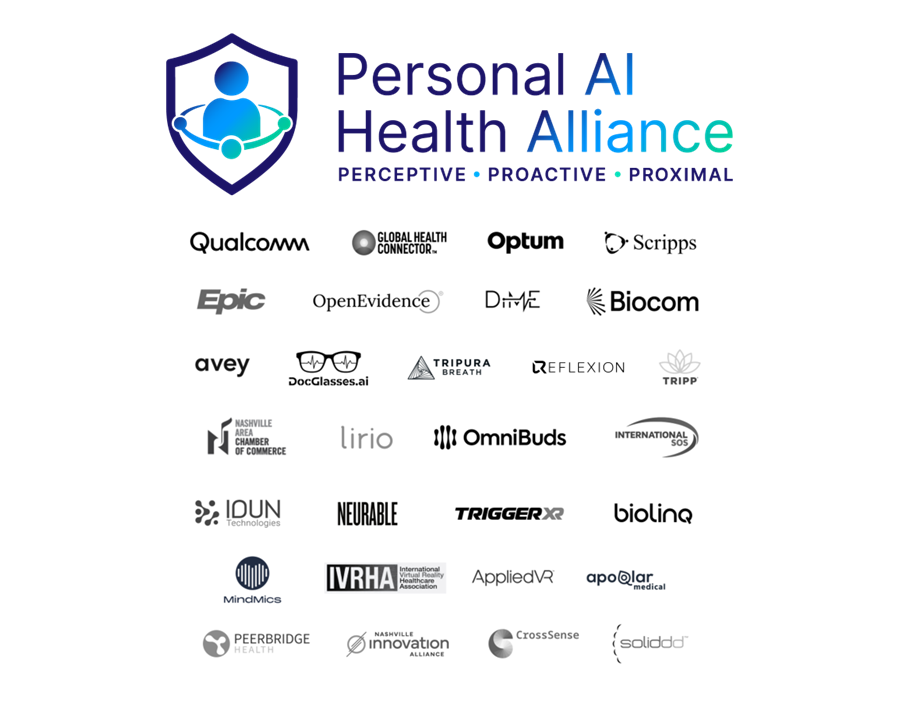
- Qualcomm Technologies and Connected Health Alliance (trading as the Global Health Connector) launched the Personal AI Health Alliance (PAIHA) Program at Snapdragon Summit 2026 to drive the adoption of Personal AI devices in the Healthcare industry with over 30 members including Optum, Scripps and Merck KGaA, Darmstadt, Germany.
- PAIHA addresses three layers of health intelligence: perceptive (continuous multi-modal sensing via wearables), proactive (virtually always-on intelligence that identifies patterns warranting attention without gaps in care) and proximal (keeping time-sensitive, personal health data processing local on the devices people already wear).
- PAIHA promotes the use of certain technologies, including edge AI foundation, to healthcare stakeholders to drive the adoption of continuous wearable intelligence devices in the healthcare industry.
Here’s a number that should stop you in your tracks: the average person spends fewer than two hours per year with a physician.1 The other 8,758 hours spent at home, at work, asleep, on a run, managing a chronic condition, etc. are largely invisible to the care system. Decisions get made on snapshots. Diagnoses are built on what your body did during a 15-minute visit, not what it’s been doing for the past three months.
Intelligent wearables can help close that gap by creating a more continuous, real-world picture of one’s health beyond those short clinic visits through the devices people already wear, including smart glasses, smartwatches, pendants, pins, smart rings, audio wearables and connected health devices. But generating data and doing something useful with it are two different problems.
Your smartwatch already tracks your health. It has tracked your heart rate through a stressful Monday, logged your sleep through the week and noticed the subtle shift in your resting rhythm before you felt anything at all. But right now, that intelligence mostly stays on your wrist. It doesn’t connect to your care team, and it certainly doesn’t change what happens at your next appointment.
That’s the gap Qualcomm Technologies and the PAIHA are working to shrink. Today at Snapdragon Summit 2026, we announced the Personal AI Health Alliance program, a multi-stakeholder initiative designed to put the full potential of on-device intelligence to work across your healthcare ecosystem.
PAIHA already has over 30 members, including Optum, Scripps and Merck KGaA, Darmstadt, Germany, bringing healthcare industry expertise and thought leadership to identify healthcare’s most pressing unmet needs. The high value use cases identified by these healthcare stakeholders require a shift from reactive to proactive healthcare by leveraging live intelligence from Personal AI devices.
Perceptive, Proactive, and Proximal Intelligence: Moving healthcare from episodic to continuous
Every day, one in four older adults falls, and most of those falls happen at home, where help may be hours away.2 Every day, a medication adherence failure sets off a chain of events that ends in a preventable hospital readmission.3 Every day, a cardiac arrhythmia develops that could have been caught earlier if only someone had been keeping track.4
For every healthcare stakeholder including payers, providers and their patients, the benefit of intelligent wearables is in the timeline shift from recording what happened or recalling it after the fact, to identifying when something may require attention in real time.
Live intelligence from Personal AI devices that is
- perceptive (continuous multi-modal sensing via wearables),
- proactive (virtually always-on intelligence that identifies patterns warranting attention), and
- proximal (keeping time-sensitive, personal health data processing local on the devices people already wear)
has the potential to be an essential part of the clinical workflow that moves us towards proactive healthcare. That does not mean replacing a doctor with an algorithm. It means a healthcare stakeholder can leverage AI in a clinical workflow that embraces the knowledge from Personal AI, and collectively drive intelligent, accessible and scalable solutions to those who need them the most.
The PAIHA aims to explore and educate on how this perceptive, proactive, and proximal approach can support experiences which balance personalization, data stewardship and user choice. The goal is not simply to generate more health data, but to help create a path for that information to become useful within real devices, clinical workflows and care models.
Why healthcare needs more than technology
The technology needed to make healthcare more perceptive, proactive and proximal is with us today. The harder challenge is translating that technology into trusted experiences that work in the real world in healthcare.
PAIHA is designed to bring technology and healthcare organizations together to help move health intelligence beyond individual devices and closer to the people who can benefit from it. PAIHA promotes the use of certain technologies including edge AI foundation to healthcare stakeholders to drive the adoption of continuous wearable intelligence devices in the healthcare.
Ultimately, PAIHA aims to commercialize the use of Personal AI devices in the healthcare industry that can meaningfully change outcomes for patients. And the collaborative work is already underway.
Join PAIHA at paihealth.org and help us collectively move healthcare to the left of the timeline — identifying risks earlier, intervening sooner and making care more proactive.
Personal AI Health Alliance
Sep 23, 2026 | 1:52

